
Next episode
Episode 6
Turkic Mythology: The Myths of the Turkic Peoples
DE 16:00TR 17:00EN 18:00
DE and EN in Berlin time, TR in Istanbul time · New York 12:00
𐱅𐰭𐰼𐰃 : 𐱅𐰇𐰼𐰇 : 𐱅𐰇𐰼𐰜
Documentaries, film, books and the Turkic Atlas: ancient and medieval Turkic and steppe history, brought back to life.
Emre-E. Yavuz
Begin the ride
Merhaba, Nöker
Historian of the steppe by passion, teacher by profession. He makes the documentaries, writes the books and builds the encyclopedia and the film. It is all a piece of cake. Bonus points if you got the wordplay.
More about Emre →Chapter I
Documentaries on ancient and medieval Turkic and steppe history, in English, Turkish and German.
Latest episode · Turkic History Explained · Episode 3
An unwritten law, from the Xiongnu to Bilge Khan: crime, family, the rules of the throne and the sacred land.
Videos load from YouTube only when you press play.
Tuesdays, Fridays, Sundays
Two episodes a week on Khan's Den, and the Khan's Den Podcast on Sundays. The English, Turkish and German versions go out on the same day.
Next episode
Episode 6
DE 16:00TR 17:00EN 18:00
DE and EN in Berlin time, TR in Istanbul time · New York 12:00
Next podcast
Podcast 2
Episode (Tue, Fri)Podcast (Sun)Next up
The calendar shows the next two weeks. Only the next episode of each series is sharp; everything else stays under wraps until it is its turn.
It all began with a blog in 2019. The YouTube channel Khan's Den followed in 2020. Together with its Turkish and German sister channels it has since reached more than 104,000 subscribers and 10 million views, from the United States to Germany, from Japan to Indonesia and from Brazil to Türkiye. It is the backbone of every project that followed.
“My professional areas of interest include the Xiongnu, the Huns of Attila, the Göktürks, the Uyghurs, the Khazars, and other various Turkic and non-Turkic peoples of the Eurasian Steppe Belt up until the High Middle Ages.”
89,600 subscribers
The main channel. Documentaries on the steppe empires, on Tengrism and Turkic mythology, on the Transeurasian theory, Old Turkic Töre law and the reasons for the steppe migrations.
Open the channel
Episode before: Did the Göktürks Descend from a Wolf? The Asena Legend
7,770 subscribers
The official Turkish channel of Khan's Den: the history of the early Turkic peoples, told in Turkish.
Open the channel
Episode before: Göktürkler Kurttan mı Doğdu? Asena Efsanesi
7,300 subscribers
The second channel of Khan's Den: the videos of the main channel, fully translated into German.
Open the channel
Episode before: Asena, die Wolfsmutter: Herkunftslegende der Göktürken
Videos load from YouTube only when you press play.
Chapter II
Bilge Khan's warning to the Türk People, in 3D. A sample of the image quality YavuzArts delivers.

The video starts by itself without sound once this section is in view. Use the speaker icon in the player to turn the sound on.
Chapter III
Two books on the First Göktürk Empire, in English and German, and a third one on the way.


Chapter IV
A digital encyclopedia of the Old Turkic steppe empires, in which every statement is checked against what it rests on.
From the Xiongnu, the Huns, the Xianbei and the Rouran to the First and Second Göktürk Khaganates, the Western Göktürks, the Uyghurs and the Yenisei Kyrgyz: the Turkic Atlas brings more than a thousand years of steppe empires together in one place, in 841 articles. Every claim can be checked. A footnote leads straight to its source, whether the Chinese annals, the Byzantine historians, the Persian and Arabic chronicles or the Old Turkic inscriptions carved on the stelae themselves.
Read it in your language. The articles are written in English, around a hundred are already fully translated into Turkish, German, Spanish and Japanese, and more follow all the time; the whole site works in all five languages. Watch the empires grow and shrink on moving maps, follow the chronology, the family trees and the guided reading paths, leaf through an atlas of hand-drawn maps, and let the Khan's Den radio play while you read.
“Five years ago, I swore that I would bring together everything there is to know about older Turkic history and culture from antiquity to the Middle Ages in a single online encyclopedia. I would leave nothing out and do it for everyone around the world, in several languages, free of prejudice and free of charge.”
Maps from the Atlas
Click a map to enlarge it. Arrow keys or a swipe turn the page. Maps by Emre-E. Yavuz.

In 552 a vassal people of the Rouran, ironworkers in the Altai, broke their overlords and raised an empire that within a generation reached from Manchuria to the Black Sea. Their leader was Bumin, the first khan of the Göktürks. His brother Istemi carried the empire west to the borders of Persia and opened relations with Byzantium.
Bumin, Istemi, the Ashina and the First Göktürk Khaganate are among the first articles already open on the Turkic Atlas, in all five languages, with portraits, maps and a radio of music from Khan's Den.

Birth of a Hero Music from the film “Bumin Khan”, on the Atlas radio
0:00
Chapter V
A Göktürk Movie. Coming to Khan's Den, dubbed in English, Turkish and German.

The film covers the Legend of Asena, the making of the Ashina clan and the rise of the Altai Türks under Bumin, from blacksmiths of the Rouran to khans of the Eurasian steppe and the founding of the Göktürk Empire in 552. It is mythical and grounded in history at the same time. Its working title was Bumin's Destiny.
It is fan-made and supported by donations. There is no studio behind it, only Emre-E. Yavuz, his computer, a set of AI tools and Blender. When it is finished, it will be free for everyone on YouTube.
Help bring Bumin Khan to the screenFan-made and funded by donations. Free for everyone on YouTube when finished. Donate on GoFundMe
Film update: The Göktürk Movie Just Got A BIG visual update
Prequel · Exclusive preview
Before Bumin and Istemi rose up against the Rouran and became khans of the steppe, they had to master many other challenges. This manga has been a wish of Emre's for years, and his favourite manga are Detective Conan and One Piece. Actually quite different directions. But don't worry: “Bumin Khan” also delivers an authentic Göktürk story, just as a manga.
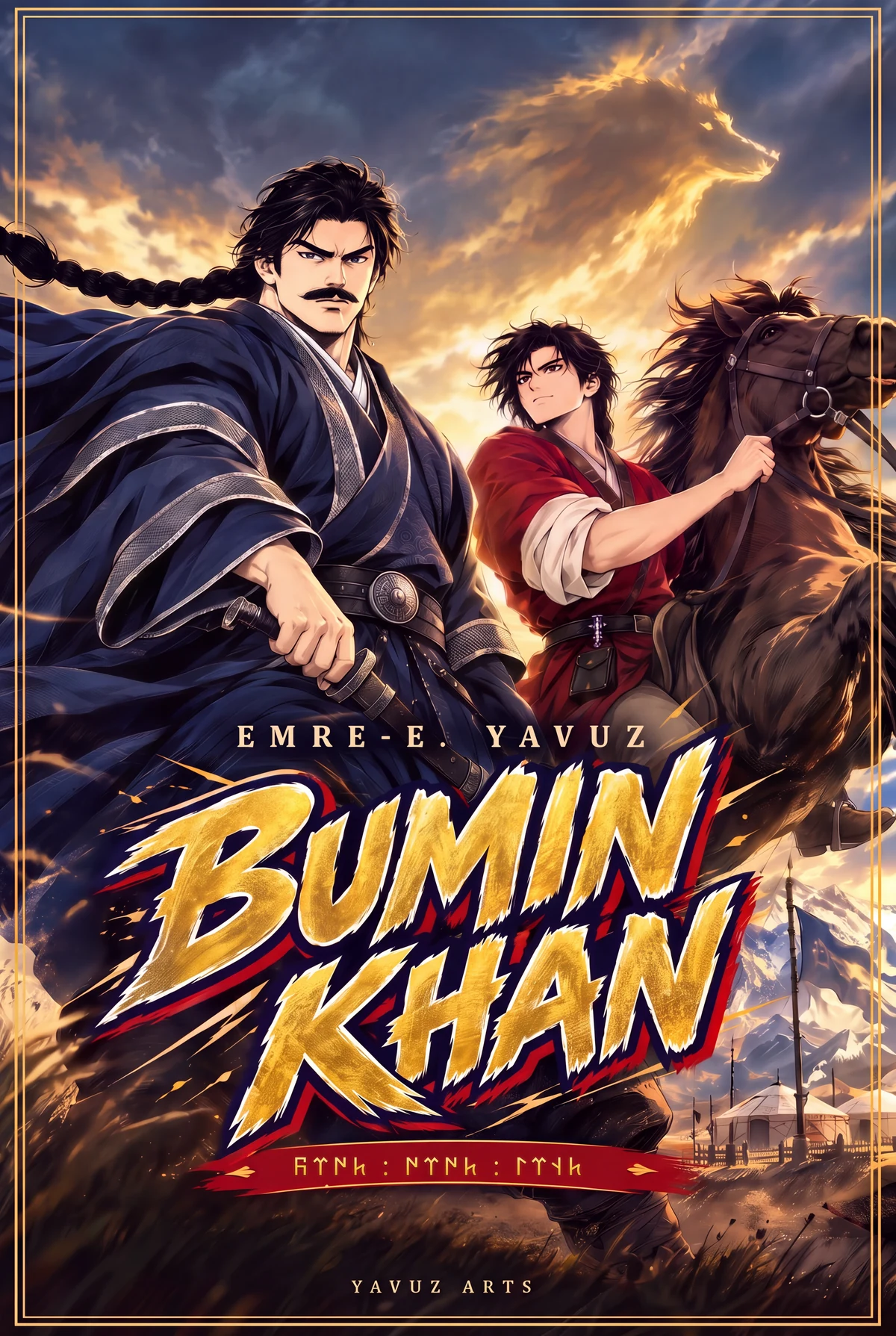
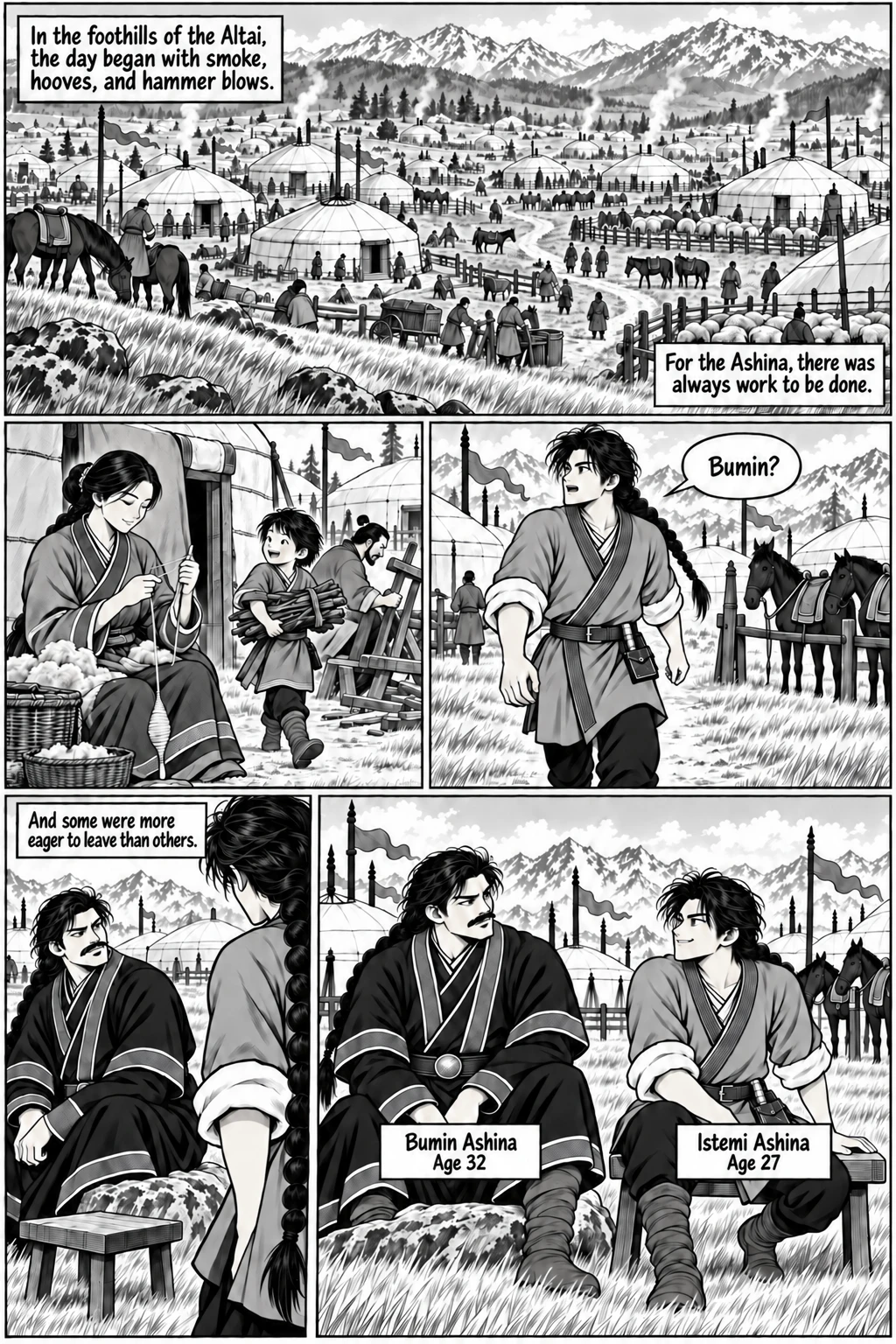
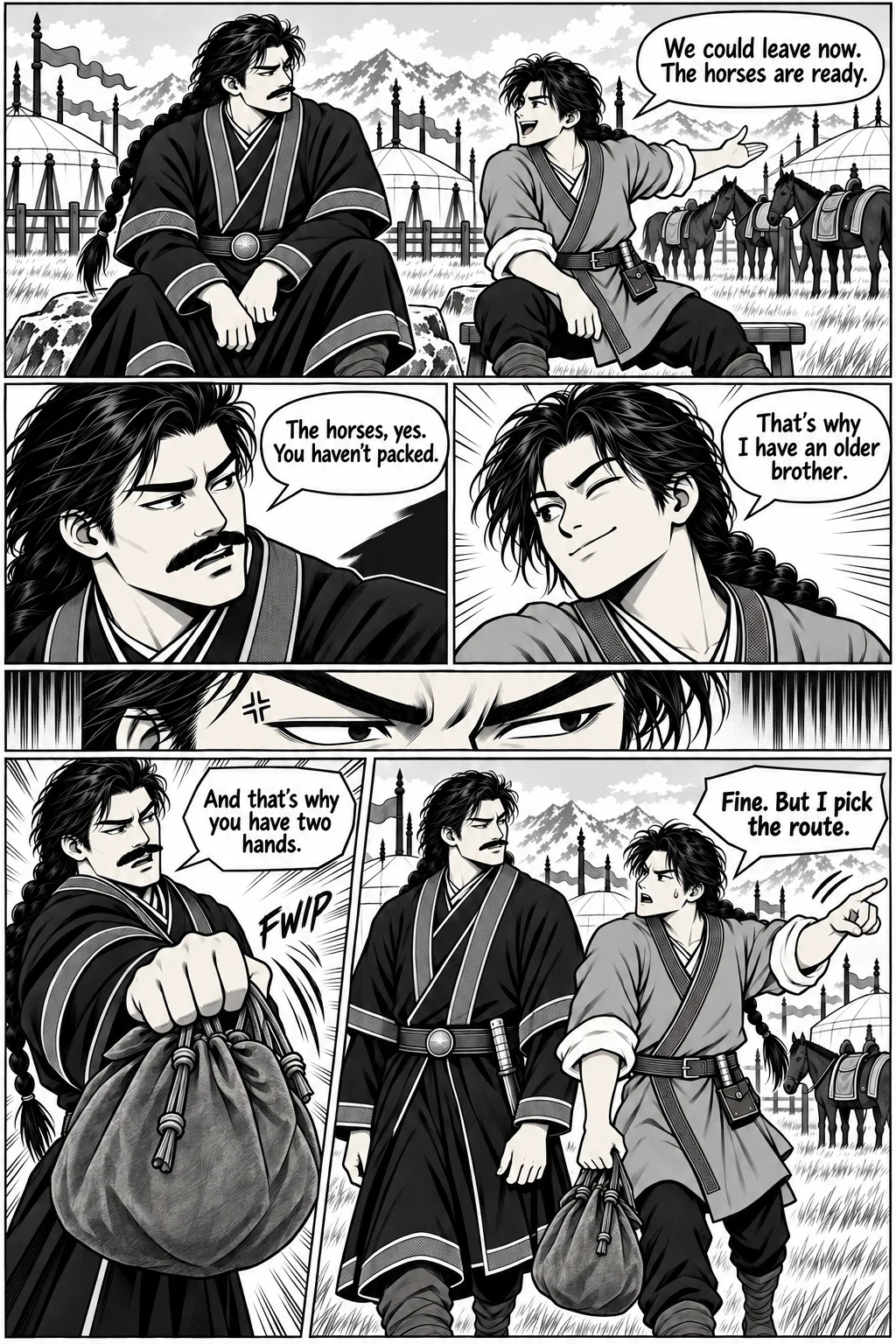
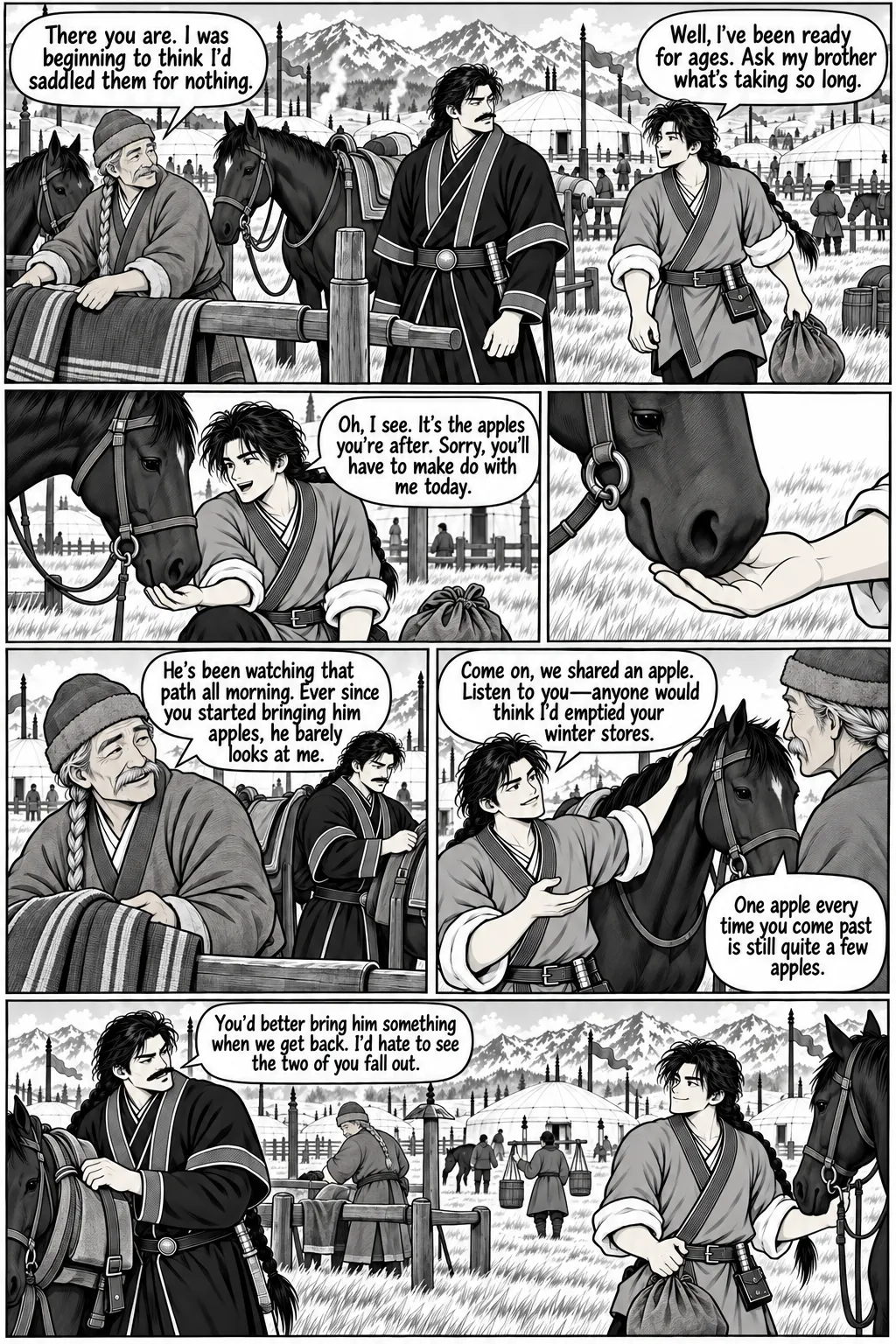
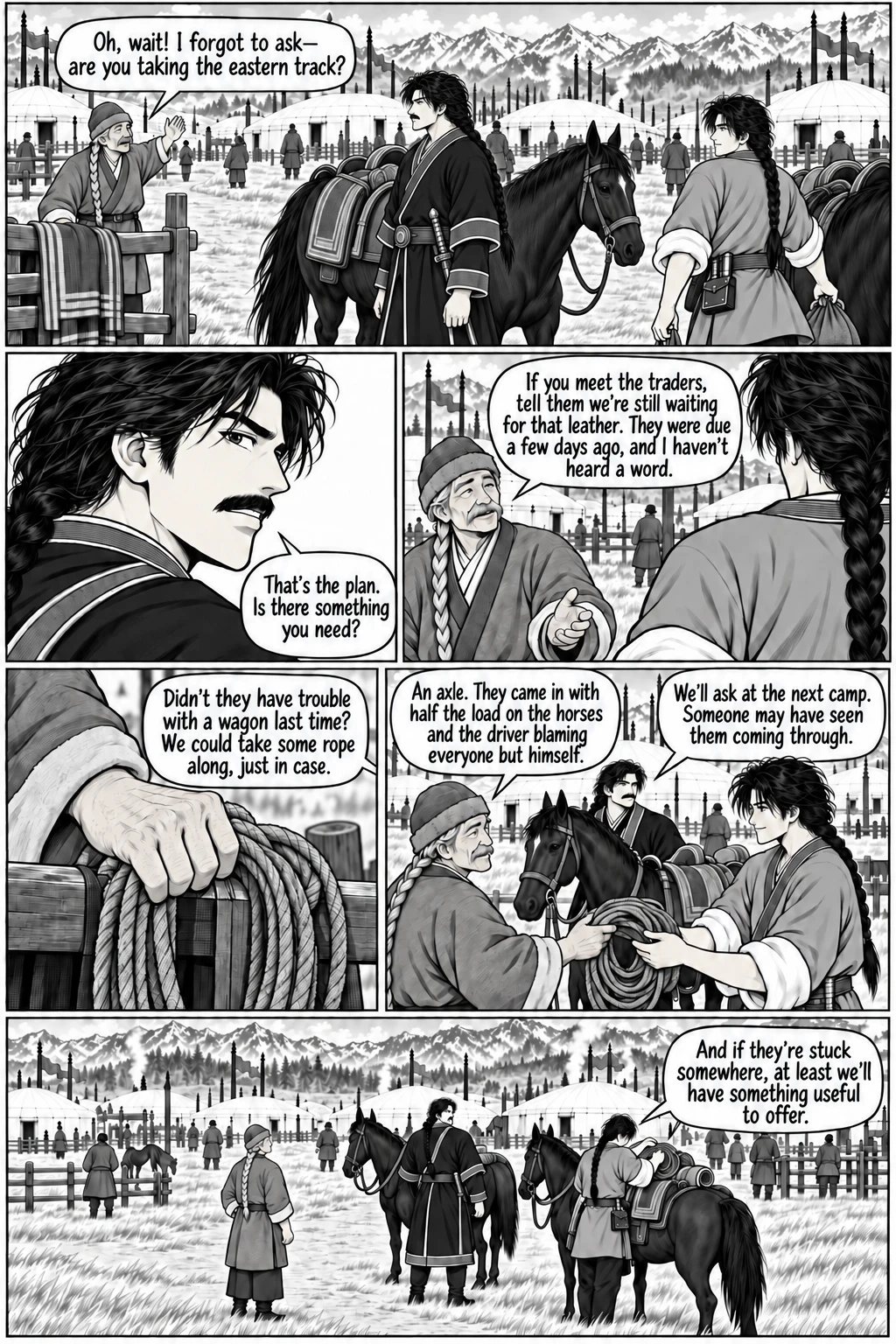
Mockup in the common tankōbon format, 11.3 × 17.5 cm, shown as an open double page.
Click a page, drag or swipe to turn it. The magnifier enlarges a page.
© Emre-E. Yavuz 2026
Chapter VI
How the ancient Turkic peoples actually looked: their faces, clothing, decorations, art and settlements across the Eurasian steppe belt.
How this is made. Reconstructions, film scenes and illustrations are made with AI image and video tools and with Blender. Emre directs them on the basis of the sources: what appears on screen follows what the sources allow, and where they are silent, that is said openly. Emre writes the books, scripts and the research behind them personally.
Experiments beyond history: anime and manga styles, sketches, fantasy and the worlds of the Cumans, Kipchaks and Pechenegs.
Every image can be licensed for your own project, from YouTube videos to books and television. New images are made on commission.
License or commission The full galleryChapter VII
Historian of the steppe by passion, teacher by profession.

Emre-E. Yavuz is a historical content creator, usually pre-occupied with the history of ancient and medieval steppe peoples, especially the Turkic peoples. By profession he is a full-time teacher of political education; Khan's Den, the books, the film and the Turkic Atlas are made in his free time.
He started because no one was covering Turkic and steppe history online in a balanced manner. Six years later, the Khan's Den channels have reached more than 10 million views worldwide, and his two books on the Göktürk Empire carried his work into the academic world.
With state-of-the-art AI tools he reconstructs how the ancient Turkic peoples looked: their faces, their clothing, their decorations, their art and their settlements across the Eurasian steppe belt.
Audaces fortuna iuvat.
Chapter VIII
Lectures, interviews and media appearances.
Lecture · Frankfurt · 2026
His first lecture before a live audience: the dual operating system of the Old Turks, which valued piety and tolerance, spirituality and pragmatism; the Kut that legitimised the khans of the Xiongnu, Rouran, Göktürks, Uyghurs and Kyrgyz; and a German-speaking Bilge Khan reading his own Orkhon inscription.
Coming soon
Interviews, articles and features on Khan's Den, the film and the Turkic Atlas will be collected here.
Coming soon
Lectures and talks on Turkic and steppe history for schools, universities, associations and events.
Get in touch →Chapter IX
Khan's Den is part of the YavuzArts media brand, which includes music, manga and the Turkic Atlas.
Vision
To bring these forgotten peoples back to life by utilizing state-of-the-art technology without neglecting historicity.
Mission
To tackle obsolete, cliché-driven narratives about the so-called “barbarian” peoples, thereby creating a space where people from all over the world can experience history without bias.
Khan's Den
Liberating history from bias. Bringing historical figures back to life. Explaining their stories with stunning audiovisuals.
Every claim traced to the source it rests on. Attested, inferred and disputed kept apart, legend named as legend.
Film, music, maps and portraits that make the steppe visible, in documentaries, in print and on the screen.
PC game
A PC game about the blow for liberation struck by Bumin and Istemi, 546 to 552.
Teaser to be added Teaser, trailer and details follow.

A semi-historical radio drama on the Khan's Den Podcast about Bumin and Istemi as young men. It is being recorded anew for 2027.
Novel
Details to be added
Reconstructing how the ancient Turkic peoples actually looked. Available for licensing and commission.
See the gallery →Chapter X
Commissions, sponsorship and collaboration: three ways to bring the history of the steppe into your project.
Films, maps, illustrations, scripts and talks, made to order and tied to the sources.
Learn more → IIReach an audience of more than 104,000 subscribers on three language channels.
Learn more → IIIResearchers, museums, creators, publishers and studios: let us build something together.
Learn more →Contact
For licensing, commissions, lectures and collaborations.


